
Republican challenger says rural communities deserve a representative who shows up, answers constituents and fights for local jobs, water and public safety
By Roger Rael
The Raton Range
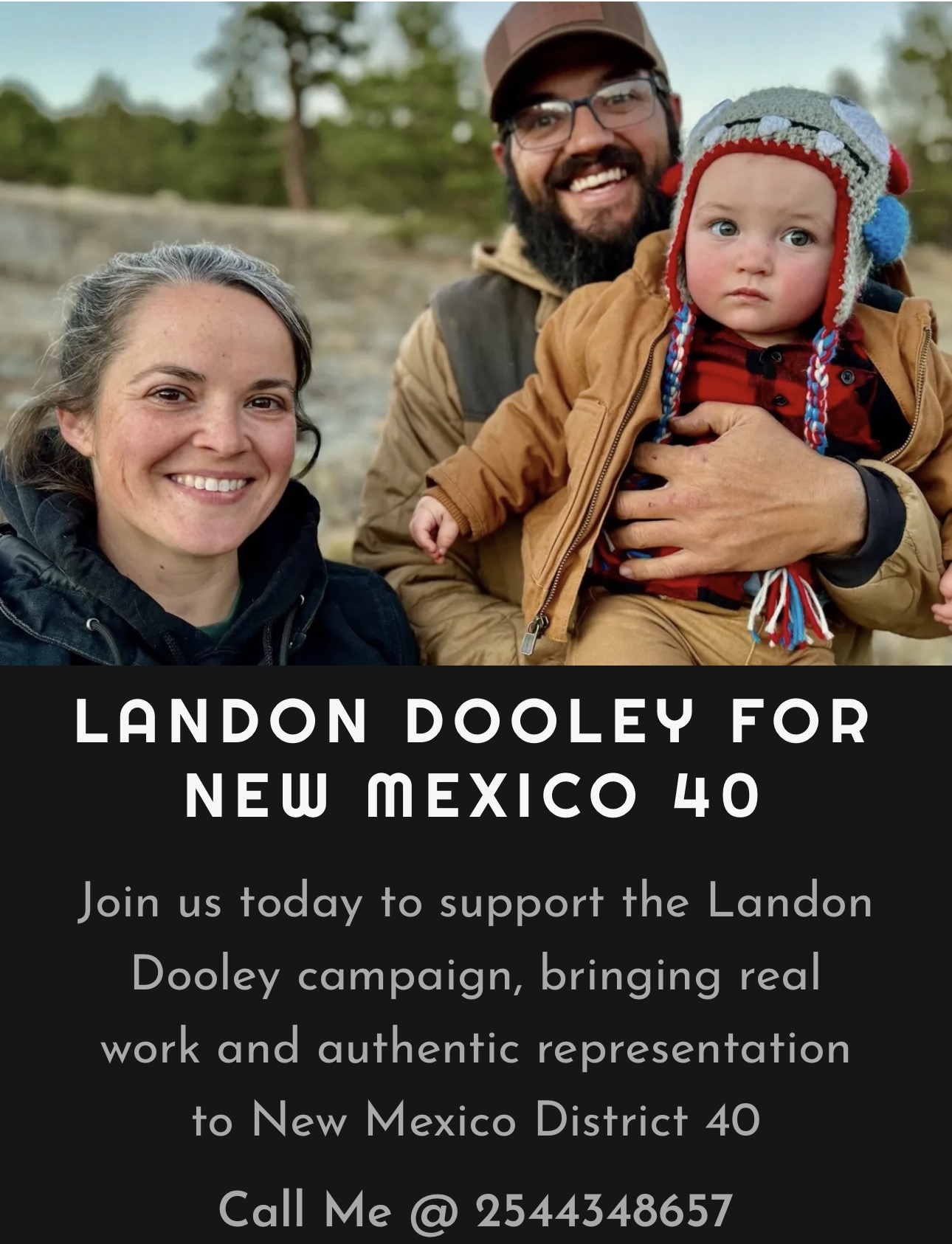
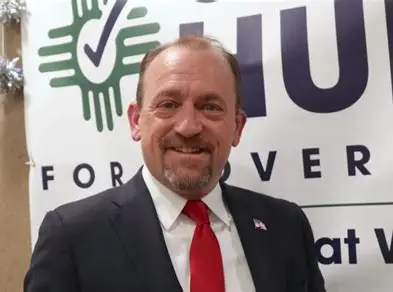
RATON, N.M. — If there is one thing Landon Dooley wants voters in House District 40 to remember, it is this: A state representative is supposed to represent the people who elected him.
That sounds simple enough. Apparently, in northeastern New Mexico, it has become a campaign issue.
In an Oct. 24 interview with The Raton Range, Dooley, a Republican candidate challenging incumbent Democratic state Rep. Joseph Sanchez, made accessibility and accountability the centerpiece of his campaign, arguing that rural communities cannot afford another legislative term in which residents struggle to get their representative’s attention.
“I personally now have had over 50 calls to him. Never gotten a return call once,” Dooley said, referring to Sanchez. He also said he had visited the representative’s office and was told the schedule was booked far into the future.
Those are Dooley’s claims, but they frame the central argument he is making to voters: Rural residents should not have to fight to get a conversation with the person elected to speak for them in Santa Fe.
“The point of the representative is to represent the people, not yourself,” Dooley said. “And so this job is to answer the phone and show up to the people who need you. I mean, that’s the job.”
Dooley’s frustration goes beyond unanswered calls. He argues that House District 40, a sprawling district with communities facing different economic and infrastructure challenges, has been taken for granted politically.
He believes that assumption has consequences for the people who live here.
“We can’t just all pay the Piper for you forever,” he said. “Well, nobody’s being represented.”
A district bigger than a campaign slogan
House District 40 stretches across a broad portion of northern New Mexico, encompassing communities with different economies, demographics and priorities. What works for one town may not work for another, and the challenges facing rural residents can look very different from those confronting larger communities.
Dooley said traveling throughout the district has reinforced just how diverse it is.
“It’s a huge district,” he said. “It’s a beautiful area and very diverse too.”
His criticism is that the district’s size and diversity have not translated into the level of representation its communities deserve.
Dooley described a political culture in which the district’s Democratic voting history is treated as a foregone conclusion, leaving little incentive to fight aggressively for its residents.
“It is always just assumed that it’s going to vote blue, no matter who, period,” he said.
Dooley rejects that approach. He argues that voters should expect results regardless of which party traditionally wins their votes.
His definition of representation is straightforward: safer communities, better schools, access to health care, reliable roads, protection of water resources and opportunities for families to build a future without leaving the state.
“We all have the same basic needs,” Dooley said. “They want to be safe. They want safe schools. They want access to health care.”
He also criticized Sanchez for what he described as missed legislative votes and a lack of engagement with constituents. Those criticisms remain Dooley’s assertions and should be evaluated against legislative attendance records and the representative’s own account.
The Raton Range sought to examine the substance of those concerns through the interview. Sanchez’s response to the allegations was not included in the recording.
AI data centers: Investment cannot come at any price
One of the most consequential subjects discussed was the growing debate over artificial intelligence data centers and their potential impact on New Mexico communities.
For Dooley, the issue comes down to a basic question: What does a company contribute to a community, and what does it take away?
He acknowledged that data centers could generate revenue, create construction work and support economic development. But he questioned whether the long-term benefits would justify the demands placed on local water supplies, infrastructure and residents.
“These companies are in it for profits,” Dooley said. “They’re not in it for the betterment of anything except for their bank accounts.”
His concern is that communities could shoulder the environmental and infrastructure costs while much of the financial benefit leaves the state.
Dooley called for stringent requirements governing data center development, including stronger water-conservation measures, noise mitigation, local hiring and commitments to reinvest revenue in the communities hosting the facilities.
He suggested that companies should use alternative cooling technologies where feasible, even when those systems cost more, rather than choosing cheaper approaches that place additional pressure on water resources.
His position is not an outright rejection of the industry. Instead, he argued that projects should be judged individually, based on community needs and enforceable commitments from the companies involved.
“If that’s the deal, then they need to be funding and paying for people to get these degrees,” Dooley said, referring to the specialized education needed for data center operations.
That is particularly relevant to rural communities such as Raton, where the promise of thousands of permanent jobs can sound considerably more attractive than the actual staffing needs of a highly automated facility.
Dooley acknowledged the distinction between temporary construction employment and long-term careers. He argued that companies should hire New Mexico construction crews where possible and help train residents for technical positions.
He also pointed out that maintenance, plumbing, roadwork and other supporting services can provide continuing economic activity after construction ends.
“Anything that we can do to keep them here is what we need to do as a community,” he said, referring to young people who leave New Mexico in search of careers.
The larger question for lawmakers is how to ensure that economic development produces measurable benefits for residents rather than simply a larger tax base and a few ribbon-cutting ceremonies.
Dooley wants the state to demand more from companies seeking access to New Mexico’s resources.
Elderly residents deserve better protection
The interview also turned to a concern that carries particular weight across northeastern New Mexico: the safety and care of older residents.
The discussion addressed reports of abuse by family members and caregivers, as well as concerns about inconsistent home-care services and the difficulty of finding dependable assistance in rural areas.
Dooley described a situation in which older residents may have little choice but to accept whichever caregiver is available, even when staffing changes make it difficult to establish trust.
He cited the experience of a neighbor who receives home assistance and nursing visits through the Department of Veterans Affairs, saying the workers assigned to the home change regularly.
“The fact is that they are the ones who literally built this country,” Dooley said of older Americans. “They deserve all of our support.”
His response focused on a broader set of problems, including workforce shortages, education, affordable housing and the difficulty of attracting qualified workers to rural communities.
He argued that communities need more dependable services and better-qualified workers, particularly when people are entering private homes to care for vulnerable residents.
However, Dooley did not outline a specific legislative proposal during the interview for strengthening elder-abuse laws, increasing inspections or improving enforcement. Those are concrete policy questions voters should press candidates to address.
Recognizing a problem is a starting point. Protecting older residents requires a plan, resources and accountability for those responsible for their care.
His first priority: Go back to the people who raised the concerns
Asked what he would do during his first week in office, Dooley said he would return to the people he has met throughout the campaign.
He said he has kept a record of residents’ concerns, including addresses, contacts and recurring problems.
According to Dooley, many of those complaints involve the same underlying issues, meaning that solutions could benefit more than one household or community.
“It’s not an overwhelming list,” he said. “When you really break it down, it’s all the same kind of needs.”
His stated approach is to use those conversations as a starting point for legislative action rather than treating constituent outreach as something reserved for election season.
Whether that approach translates into results would depend on what proposals he advances, how he works with other lawmakers and whether he can secure support for his priorities.
Still, his emphasis on personal accessibility is a clear contrast with the frustration he says prompted his candidacy.
Dooley has made his personal cellphone number and email addresses available to constituents, saying he wants residents to be able to contact him directly.
“I will answer the phone. I will show up when you call. I will address it, even if I don’t know the answer,” he said.
He added that knowing when to seek help from people with the right expertise is part of effective leadership.
Can he work across party lines?
Dooley also addressed criticism that his Republican affiliation means he would be unwilling to work with Democrats.
He rejected that characterization, saying he is prepared to work with anyone willing to have a substantive conversation.
“I’m willing to work with anybody who’s willing to work with me,” Dooley said.
He said disagreements should be handled through discussion and negotiation rather than personal attacks, arguing that lawmakers have an obligation to use their time productively.
His comments suggest that he views cooperation as a practical necessity, even when he strongly disagrees with another lawmaker’s positions.
That distinction will matter in a Legislature where passing legislation requires building coalitions and negotiating with people who do not always share the same priorities.
For voters, the test will be whether that willingness to cooperate produces results for the district.
A challenge to the status quo
Dooley’s pitch to voters is built around a contrast between what he sees as an established political system and the kind of representative he says he would be.
He is promising more direct communication, more attention to local concerns and a more aggressive approach to demanding benefits from economic development.
He is also making a broad argument about rural New Mexico’s place in state government: Communities outside the major population centers should not be treated as an afterthought.
“The fact is, the standards that we have all come to accept and just expect from these people who take these seats is ridiculous,” Dooley said.
That is a forceful campaign message. Delivering on it is another matter.
A representative can answer every call and still struggle to pass legislation. A candidate can identify legitimate problems without yet having the detailed policy proposals needed to solve them. Voters deserve both accessibility and competence, not one as a substitute for the other.
Dooley says he is prepared to bring a different approach to the job. His challenge is to demonstrate that approach through specific, workable proposals and results that extend beyond campaign promises.
For residents of House District 40, the questions are practical ones: Who will fight for rural schools? Who will protect water resources? Who will push for better public safety and elder care? Who will help create careers that keep young people in New Mexico?
And perhaps most simply, who will make time to listen?
Dooley has made his answer clear.
“My focus is this district being represented for the first time in the history of it existing since New Mexico was founded,” he said.
That is a sweeping claim about the district’s political history, and one that should be understood as his assessment rather than an established historical fact.
But the frustration behind his campaign is unmistakable. Dooley is asking voters to reject the idea that a district’s traditional voting patterns should determine what its residents can expect from their elected officials.
His message is that representation is not a party label, a legislative title or a seat in Santa Fe. It is a responsibility to the people who live back home.
The election will determine whether voters believe Dooley is the person to carry that responsibility.
For now, he is betting that people who have struggled to get their representative’s attention will respond to a candidate promising to pick up the phone.




Leave a Reply