

By Martin “Modey” Hicks
Early voting is underway, and Colfax County voters are being asked to make decisions about who deserves their trust
Here is the question I think every voter should ask:
Have you actually looked at the record?
Don’t vote simply because you know somebody.
Don’t vote because a friend, relative, or neighbor told you who to support.
And don’t vote based solely on Facebook posts, campaign slogans, or political loyalty.
A ballot is a responsibility.
This election allows voters to do something we don’t do nearly enough in small-town politics: ask uncomfortable questions and look for the documentation.
Not rumors.
Not gossip.
The record.
PUBLIC OFFICE BELONGS TO THE PUBLIC
WHY NEW MEXICO NEEDS A CHANGE IN DIRECTION
New Mexico does not need another governor explaining why the problems are complicated.
It needs somebody willing to start fixing them.
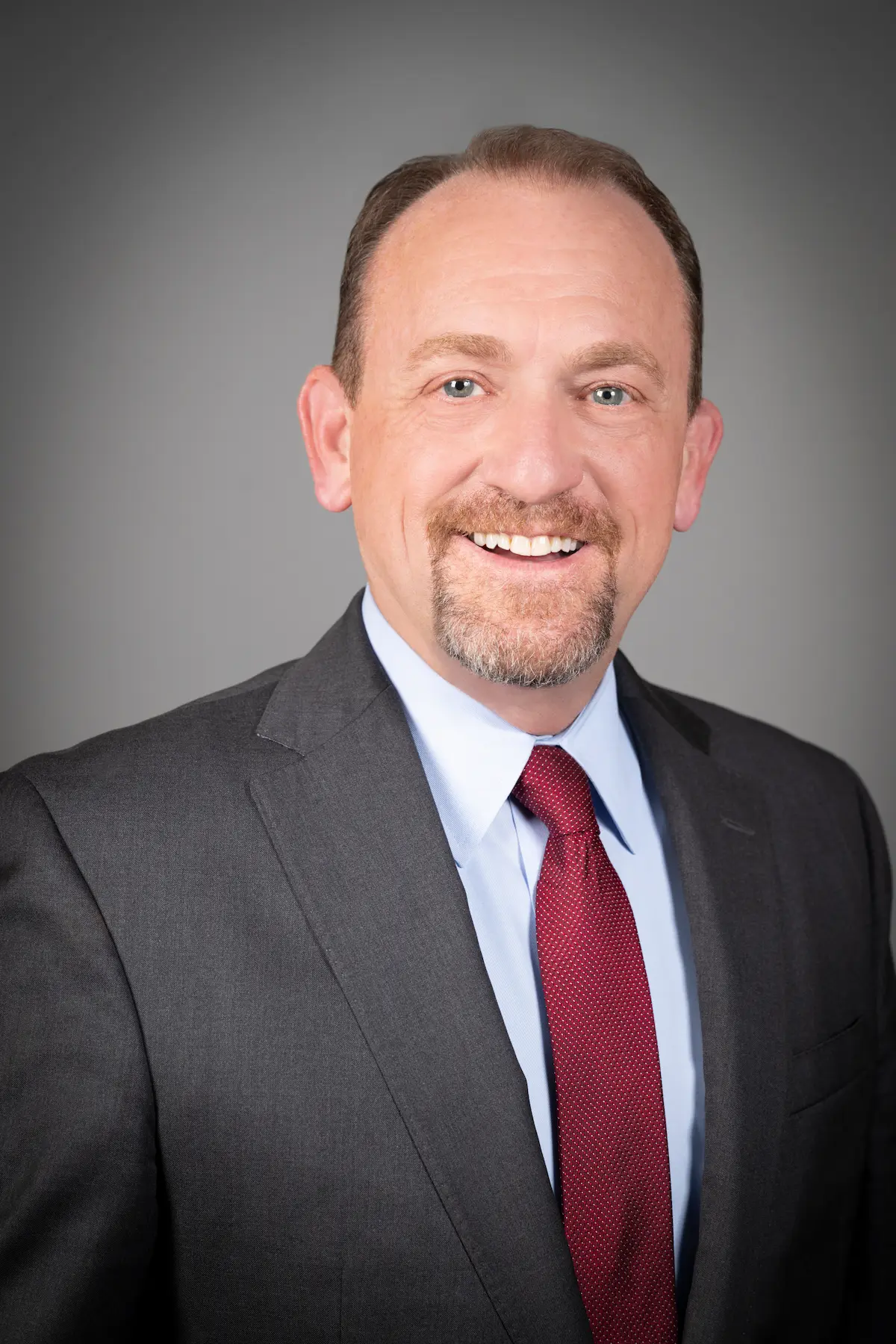
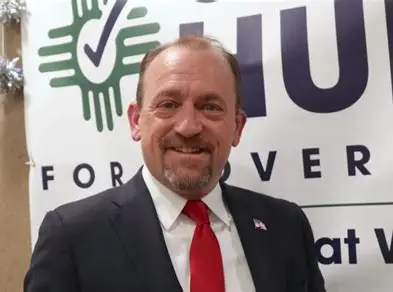
That is why I am supporting Gregg Hull for governor.
This is not about party labels. It is about whether New Mexico is satisfied with the direction it is headed.
For years, New Mexicans have watched crime become a daily concern, businesses struggle under layers of regulation and taxes, rural communities fight to keep doctors and hospitals, and families leave the state looking for better opportunities.
Hull’s argument is straightforward: New Mexico cannot spend its way out of those problems.
He wants to make the state safer by rebuilding law enforcement, improving officer recruitment and retention, strengthening prosecution and restoring consequences for violent crime. His public-safety plan also recognizes something politicians often miss: police should not be expected to solve every mental-health, addiction and homelessness problem by themselves. Hull supports expanding behavioral-health resources so officers can concentrate on actual crime and emergencies.
That is a practical distinction.
Then there is the economy.
Hull is proposing a phased elimination of the state’s personal income tax, with each step tied to maintaining sufficient reserves and funding existing obligations. His newest plan would begin by exempting portions of qualifying personal income, eventually moving toward elimination while continuing to tax net business profits.
Critics will argue that taxes pay for government.
They’re right.
But government also has an obligation to ask whether it is getting enough value from the money it already collects.
Hull’s answer is to control spending before demanding more from working New Mexicans. He has argued that state spending has grown faster than personal income and says existing programs should be adequately funded before government keeps creating new ones.
That matters in a state sitting on enormous energy revenues while many ordinary families still struggle to make ends meet.
And it matters particularly outside Albuquerque and Santa Fe.
Raton, Springer, Clayton, Taos, Las Vegas and the communities scattered across northern New Mexico don’t experience government the way the political class inside the Roundhouse does.
Rural New Mexico needs jobs.
It needs healthcare.
It needs functioning roads and infrastructure.
It needs public safety.
And it needs a governor who understands that economic development cannot consist of waiting for another government program to appear.
Hull’s record as Rio Rancho mayor is central to his argument. He points to his experience recruiting employers and creating high-paying jobs, along with eight years chairing the New Mexico Mayors Caucus and working with mayors across the state.
Haaland brings a formidable résumé of her own. She served in Congress and later ran the U.S. Department of the Interior, overseeing a federal agency with roughly 70,000 employees and an $18 billion budget.
But that is precisely where this election becomes a choice.
Do New Mexicans want more federal experience, or do they want a governor whose experience has been rooted in actually running a New Mexico city?
Haaland talks about affordability through expanded tax credits, housing policies, renewable energy, and other government investments. She also favors targeted tax changes rather than broad tax reductions.
Hull is making a fundamentally different argument.
Stop making government bigger.
Make it work better.
Make New Mexico competitive.
Put more money in the hands of people who earn it.
Give law enforcement the resources and authority to do its job.
Demand results from schools.
And stop pretending that New Mexico’s problems are inevitable.
That is the choice sitting in front of voters.
This election is not about whether Gregg Hull has a perfect answer to every problem. No candidate does.
It is about direction.
And after years of watching New Mexico struggle with crime, economic stagnation, workforce shortages, and an increasingly expensive government, The Raton Range believes it is time to try a different direction.
Gregg Hull deserves the opportunity to lead it.
THE SHERIFF’S RACE DESERVES SCRUTINY
The Colfax County sheriff’s race between Beto Dominguez and William “Bill” Cody Ayon deserves the same examination.
Dominguez has law-enforcement experience, including his time with the Raton Police Department.
Ayon brings military and law-enforcement experience, including leadership involving policy, budgets, and government equipment. His military record includes a Bronze Star, which he has publicly characterized as an achievement of his team.
Those credentials are part of the record.
So are the questions surrounding law enforcement.
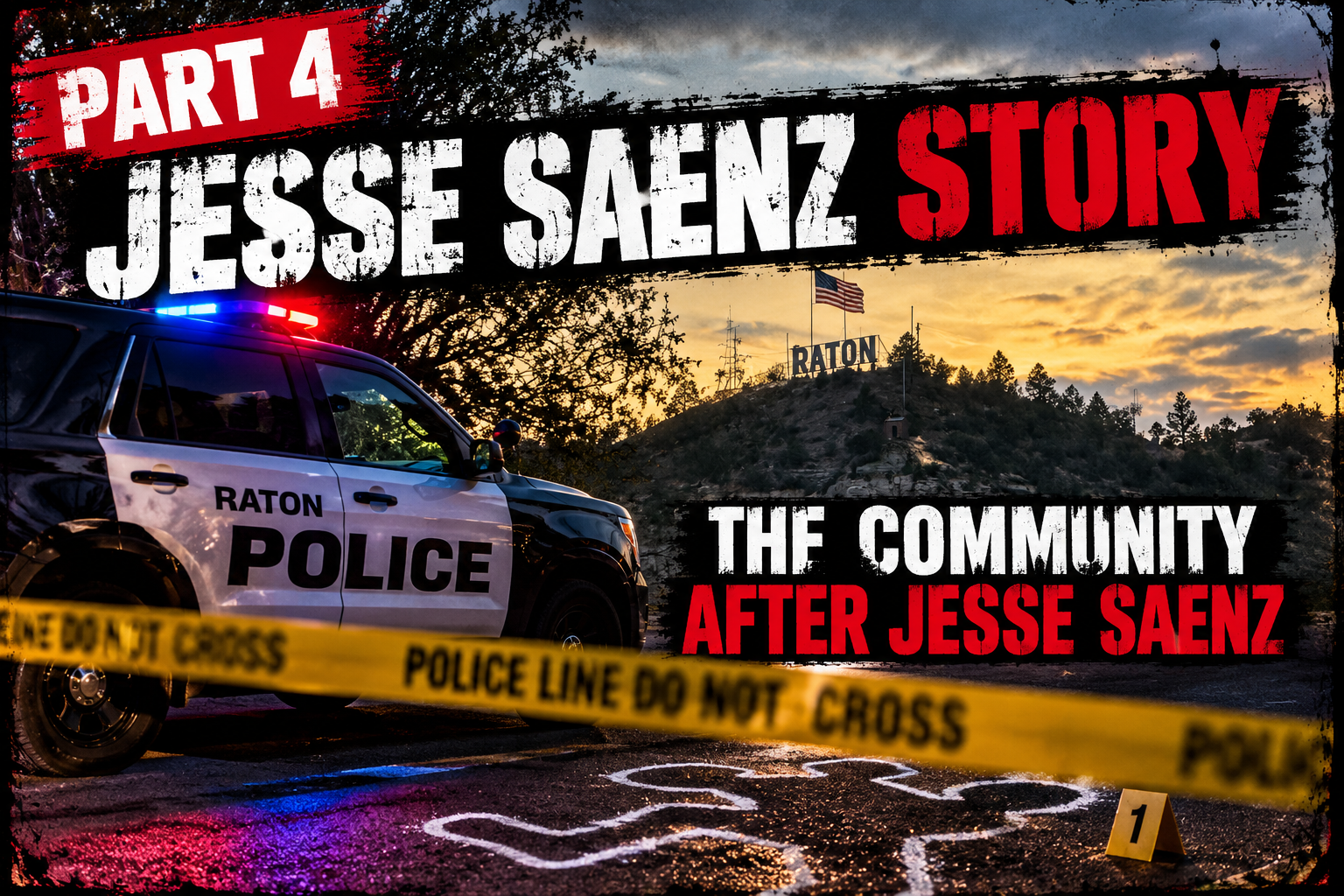
The death of Jesse Saenz while in custody remains part of the history voters should examine when evaluating candidates connected to the Raton Police Department. The material reviewed describes Saenz as being restrained in handcuffs and leg irons and subjected to multiple Taser deployments. The officers involved were acquitted of criminal charges. A subsequent civil matter resulted in the City of Raton paying damages to the Saenz family.
That does not establish criminal wrongdoing by a candidate.
But it does establish something important:
The public has a right to examine what happened. Law enforcement is given extraordinary authority over citizens. With that authority comes extraordinary responsibility. Jesse Saenz lost his life, Beto Dominguez failed under pressure, and a family lost a brother, a son, an uncle, while the community was severely divided as a result of what happened in the back of that patrol car.
THE SAME STANDARD SHOULD APPLY TO AYON
There has also been material concerning an incident involving Cody Ayon and Kevin Hoy.
If Ayon was not criminally charged, voters should know that. If the available evidence did not establish wrongdoing, voters should know that too. If his departure from employment was related to a health issue rather than criminal conduct, that matters.
The point is simple: distinguish between allegations and documented facts.
Look at the court records.
Look at the available video.
Look at the official paperwork.
Then make your own judgment.
YOUR FRIENDS ARE NOT YOUR QUALIFICATIONS
Another question voters should be willing to ask is who surrounds the people asking for public office. A friendship does not prove wrongdoing. An acquaintance does not prove wrongdoing. But public officials are judged partly by their judgment and the company they keep.
That means voters can reasonably ask questions about public relationships and whether candidates knew relevant information about people publicly associated with them.
Again, the answer should come from documentation, not rumor. I have receipts; stay tuned.
THE JUDICIAL RACE DESERVES A CLOSE LOOK
LINDA BACA: CURRENT COURTROOM EXPERIENCE
Linda E. Baca offers voters a different kind of judicial résumé in the Colfax County Magistrate Judge Division 2 race, built on decades of public service and nearly 10 years managing the Springer Magistrate Court.
Baca began working for the Town of Springer while still in high school and later worked at Miners’ Colfax Medical Center and the New Mexico Boys School. When that facility became an adult prison, she worked in the classification department, handling inmate records, payroll, and paperwork while attending hearings and meetings involving inmates.
She eventually moved into the Springer Magistrate Court, first as a clerk and later as interim court manager. Baca says that experience has given her a practical understanding of how the court operates and how decisions affect defendants, victims, and families.
Baca also emphasized judicial independence and recusal. She said she would not hear a case involving someone with whom she had a personal relationship because a judge must remain fair and unbiased.
On sentencing, Baca said repeat offenses can require increasingly serious consequences, but decisions involving jail should be based on the offense, the defendant’s history, public safety, and the limits of the law.
She also points to changes in the courts since Warren Walton left the bench in 2022, including the continued move toward electronic records and updated court procedures.
That difference is central to Baca’s campaign.
“He brings experience,” Baca said of Walton. “I bring current experience. I know the changes, and I know the updates to the law.”
For Baca, the argument is not that experience is unimportant. It is that experience must remain current.
“All cases are important because you’re dealing with people’s lives,” she said.
WARREN WALTON: EXPERIENCE WITH A COMPLICATED RECORD
Warren G. Walton brings 21 years of experience as a magistrate judge to the race, but his judicial record also contains a disciplinary history that voters will have to weigh against that experience.
In December 2018, the New Mexico Supreme Court publicly censured Walton following a stipulated agreement with the Judicial Standards Commission. Walton admitted multiple instances of judicial misconduct involving ex parte communications, failure to notify opposing parties, and other violations of judicial procedure.
Among the incidents, the disciplinary record says Walton communicated with a criminal defendant and the defendant’s mother while the case was pending, and counsel represented the defendant. He also quashed a bench warrant following an ex parte communication and failed to allow the other parties to respond.
The disciplinary record becomes particularly significant in a judicial election because it also addresses Walton’s political considerations while serving on the bench.
According to the Supreme Court record, Walton admitted allowing public opinion, fear of criticism, and political interests to influence his judicial conduct and decisions. The record specifically states that he made statements indicating he needed to win an election and would accommodate attorneys, officers, or members of the public because he needed votes.
That is a significant issue for voters considering a candidate for a judicial position, where independence and impartiality are fundamental expectations.
Walton’s disciplinary case resulted in a public censure, along with a deferred suspension without pay and requirements that included supervised probation, mentorship, and judicial ethics education.
Walton has since returned to the campaign trail arguing that his experience and knowledge of the magistrate system remain valuable.
The question for voters is whether that experience outweighs the concerns documented in his disciplinary record.
Baca is asking voters to look at what she describes as current courtroom experience.
Walton is asking them to look at more than two decades of judicial experience.
The Division 2 race gives voters the final say on which record they believe better prepares someone to sit behind the bench. Remember, the Division 2 Race is an election that allows everyone in Colfax County to cast their ballot for either Baca or Walton.
AND THEN THERE’S DISTRICT 40
District 40 presents another basic question:
CAN CONSTITUENTS REACH THEIR REPRESENTATIVE?
DISTRICT 40 DESERVES A REPRESENTATIVE WHO ANSWERS
For House District 40, the 2026 election presents voters with a basic question: What does representation actually look like?
Republican challenger Landon Dooley has made constituent access one of the central issues of his campaign. In a recent candidate questionnaire, Dooley said he personally had 37 calls that went unanswered while trying to reach the incumbent, Rep. Joseph Sanchez. He also said residents affected by the Hermits Peak-Calf Canyon fire had struggled to obtain assistance from elected representatives. Those are Dooley’s claims, and they deserve to be examined against the incumbent’s record.
Sanchez, a Democrat from Alcalde, has served in the Legislature from District 40 since 2023, after an earlier term from 2019 to 2021. The district stretches across portions of Colfax, Mora, Rio Arriba, San Miguel and Taos counties, making constituent access particularly important in a geographically large rural district.
There is also a striking difference in the responses provided to Source New Mexico’s 2026 voter guide.
Dooley answered the organization’s questions about the district’s biggest problems and his priorities for the 2027 Legislature.
Sanchez did not respond to those questions.
That does not, by itself, establish that Sanchez never communicates with constituents. It does, however, raise a legitimate question about how accessible an elected representative should be when voters are deciding whether to give him another term.
Dooley has built his campaign around that question.
His stated priorities include public safety, stronger schools, economic growth and jobs, responsible government spending and constitutional rights. His campaign describes the broader objective as providing what he calls “real work” and “real representation.”
Public safety is a particularly prominent part of his platform. His proposals include stronger prosecution of violent crime and fentanyl trafficking, support for law enforcement, additional officer training and resources, and measures intended to address repeat offenders.
But public safety is not the only issue facing District 40.
The district includes rural communities where residents travel considerable distances for medical care, infrastructure remains a persistent concern and economic opportunities can vary dramatically from one community to another.
That makes the constituent-access question more than a campaign talking point.
A representative cannot personally solve every problem brought to the office. But voters can reasonably expect their representative to have a functioning avenue for constituent communication and to explain what that office is doing on behalf of the district.
The New Mexico Legislature lists Sanchez’s district office in Alcalde and identifies a district legislative aide, Conner Tharp, as a constituent contact.
So there is a straightforward question for the incumbent:
How does a constituent in Raton, Springer, Mora, Taos or anywhere else in District 40 actually get through to the representative when they need help?
And there is an equally straightforward question for Dooley:
If elected, exactly how will you make constituent access different?
Those questions matter more than campaign photographs, social-media posts or slogans.
District 40 covers a lot of ground.
Its voters deserve to know whether the person asking for another term will be accessible when they call, responsive when they need assistance and willing to publicly answer questions about the job.
And they deserve to know precisely what the challenger intends to do differently.
That is the comparison voters should make on Nov. 3.
YOUR VOTE IS YOURS.
USE IT WITH YOUR EYES OPEN.
“Have a Wonderful Day.”