
September 12, 2026 | The Raton Range
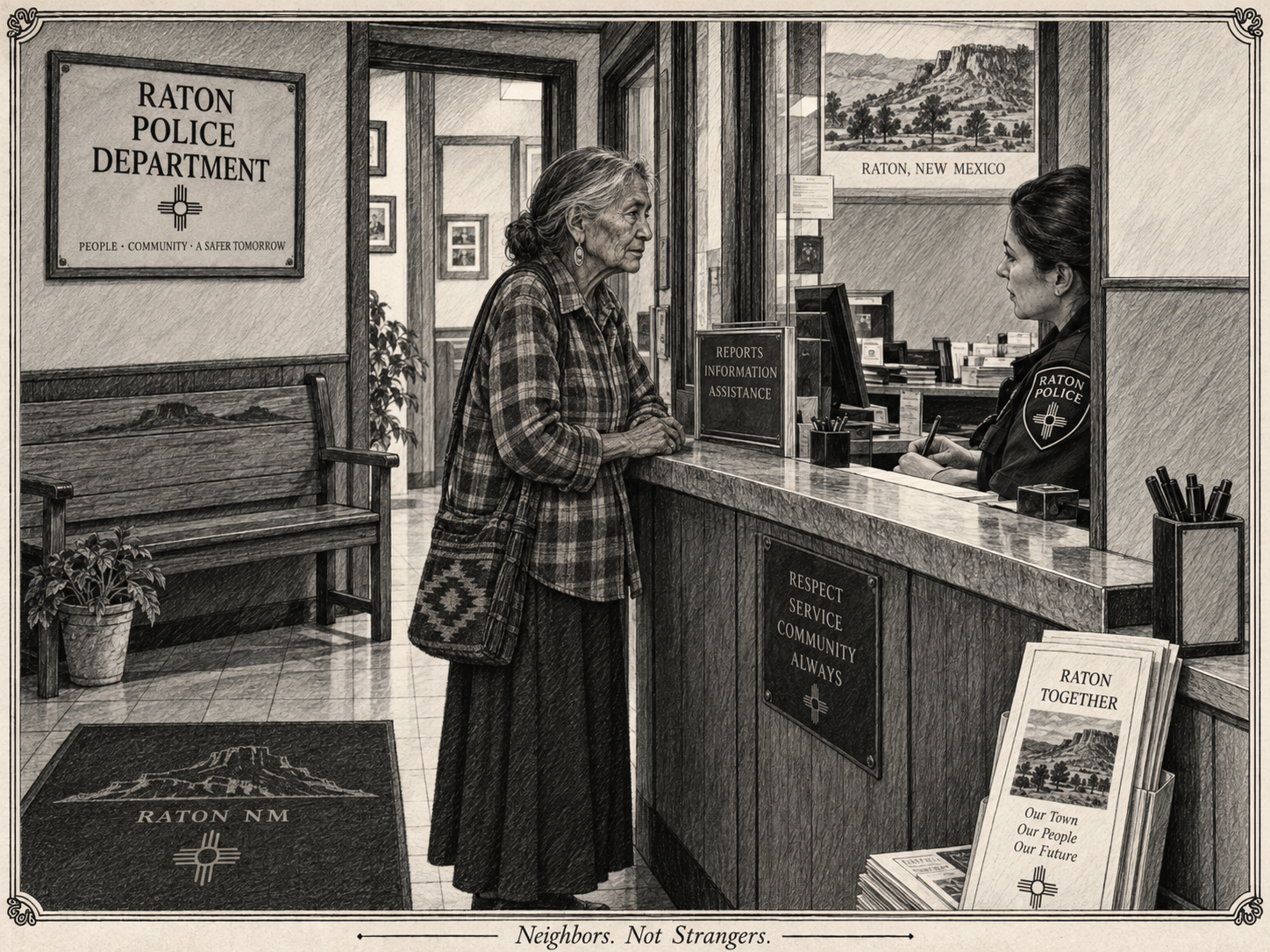
The Raton Range was at the Raton Police Department on unrelated business when an elderly Raton woman arrived to follow up on a report involving her missing wallet and personal documents.
The woman, whose name is being withheld by The Raton Range due to her age and the sensitive personal information involved, shared her account while waiting at the department.
According to the woman, she had recently helped an acquaintance by providing a ride after meeting her at a local bank. She said she later discovered her wallet was missing and believed it may have been taken while the two women were together.
The woman told The Raton Range that the wallet contained cash, bank cards, medical information, identification, and her Social Security card.
“I don’t care about the money,” she said. “It’s my cards. I have to replace everything.”
The woman said she contacted police and was advised to complete the reporting process. She said she was hoping the matter could be resolved quickly because of the importance of the documents inside the wallet. The woman said she contacted police and was advised to complete the reporting process. She said she was hoping the matter could be resolved quickly because of the importance of the documents inside the wallet.
For many older adults, however, losing a wallet can mean much more than losing cash. A single wallet may contain a driver’s license, Social Security card, Medicare or insurance cards, bank cards, prescription information, and other documents that can be difficult, confusing, and time-consuming to replace.
That burden can become especially difficult for seniors who may already be managing medical appointments, limited transportation, fixed incomes, or unfamiliar online replacement systems. What may appear to be a relatively simple property crime can quickly turn into days or weeks of phone calls, paperwork, canceled cards and concerns about identity theft.
The problem also raises a broader question: How prepared are older residents when important documents are stolen, and what are law enforcement agencies, state offices, banks and medical providers doing to make the replacement process easier and safer?
That question matters because older Americans remain frequent targets of fraud and identity theft, and a stolen wallet can provide some of the personal information criminals use to open accounts, make purchases or impersonate a victim.
For seniors and their families, several precautions can reduce the damage. Social Security cards should generally be kept in a secure place rather than carried every day. Families can also keep a private list of important phone numbers for banks, insurers, and medical providers so cards can be canceled or replaced quickly if a wallet disappears.
The woman’s experience at the Raton Police Department illustrates how quickly an everyday situation can turn into a much larger problem. For her, the greatest concern was not simply the money that was missing. It was the loss of the documents she depends on to manage everyday life.