
By Roger Rael
The Raton Range
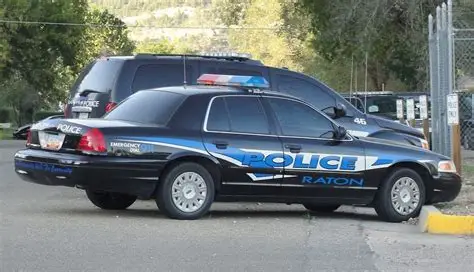
RATON, N.M. | A series of deaths, a fatal fire and an officer-involved shooting have raised questions about how a small police department handles multiple serious investigations. At the same time, residents seek answers about cases affecting their community.
Several unrelated cases have unfolded in and around Raton in recent months, including an April fatal fire, an August officer-involved shooting, and then the discovery of the body of a person no one had heard or seen in two years, prompting a welfare check. Then the September discovery of a woman’s body inside an abandoned trailer on Price Street.
On Sept. 20, Raton police discovered the body of 50-year-old Josephine Michelle Tafoya inside an abandoned trailer at 1133 Price St., Space 13. Police later identified Tafoya as a Holman resident who had been reported missing earlier that week. The Raton Police Department has classified the death as suspicious. An autopsy has been completed, but police have said the cause and manner of death have not been determined. Authorities have not publicly classified Tafoya’s death as a homicide.
Another major investigation began Aug. 1 after an officer-involved shooting in Raton.
According to New Mexico State Police, Raton officers responded to a domestic violence call in the 400 block of East Third Street. State police said 68-year-old Paul Andrew Terry fired multiple rounds at responding officers. Raton police requested assistance from New Mexico State Police and the Colfax County Sheriff’s Office. Terry was wounded during the confrontation and later died at Miners’ Colfax Medical Center. New Mexico State Police assumed responsibility for investigating the officer-involved shooting. State police said investigators would act as fact-finders and submit their findings to the district attorney for review and a determination on whether the officers’ actions were justified. The use of outside agencies in serious investigations highlights a broader issue for a small community: the investigative resources available when local law enforcement is confronted with multiple complex cases.
Raton does not have the resources of a large metropolitan police department. The city works with other law enforcement agencies and specialized state agencies when cases require additional assistance.
New Mexico State Police maintains a district office in Raton, while the State Fire Marshal’s Office has investigators trained to determine the origin and cause of fires.
“The issue is not simply whether Raton police can investigate a crime. It is also whether the department has sufficient staffing, training, and outside support to handle several serious cases while continuing its regular law enforcement responsibilities.”
Questions about transparency have accompanied The Raton Range’s efforts to obtain information concerning some cases.
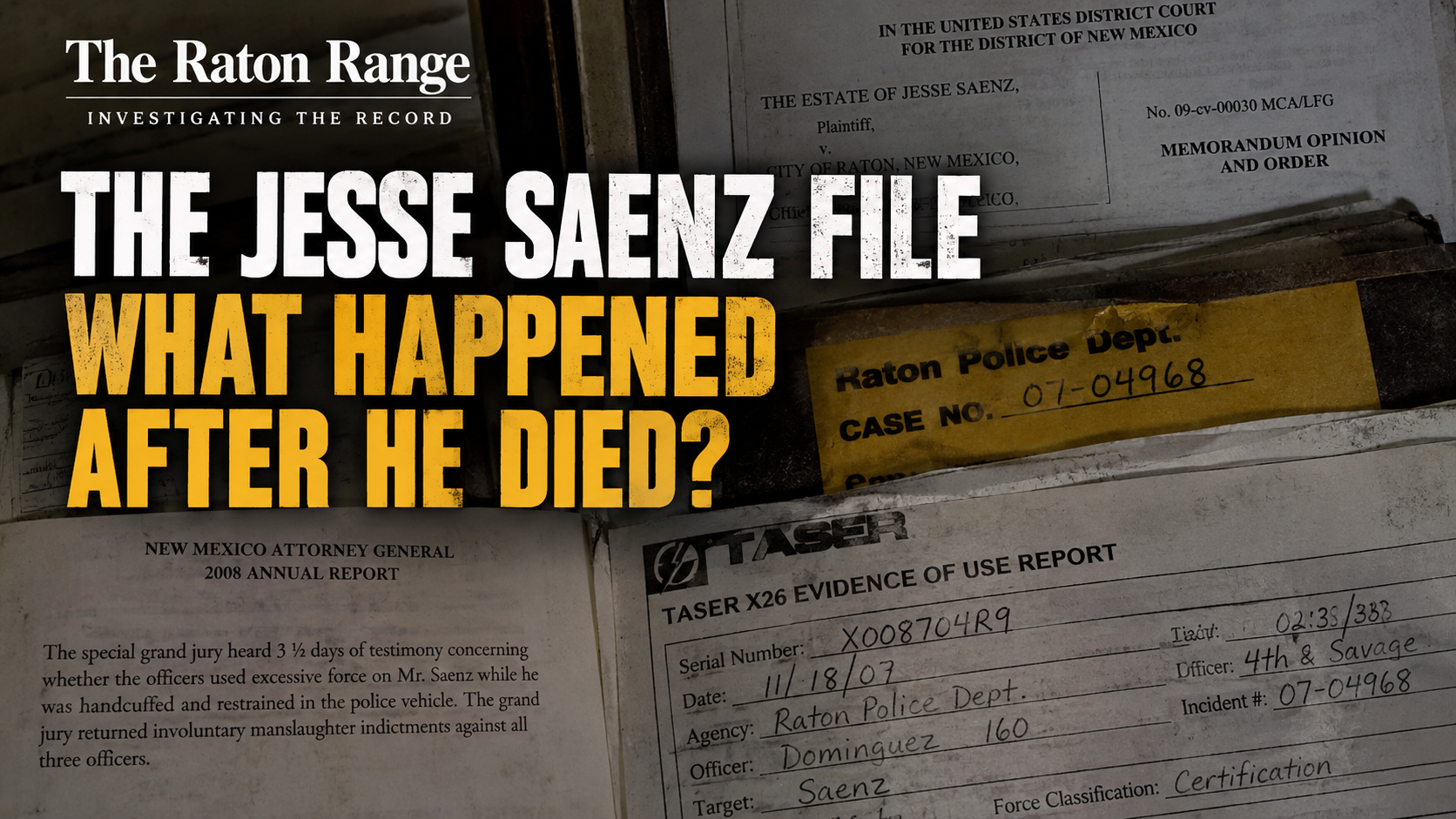
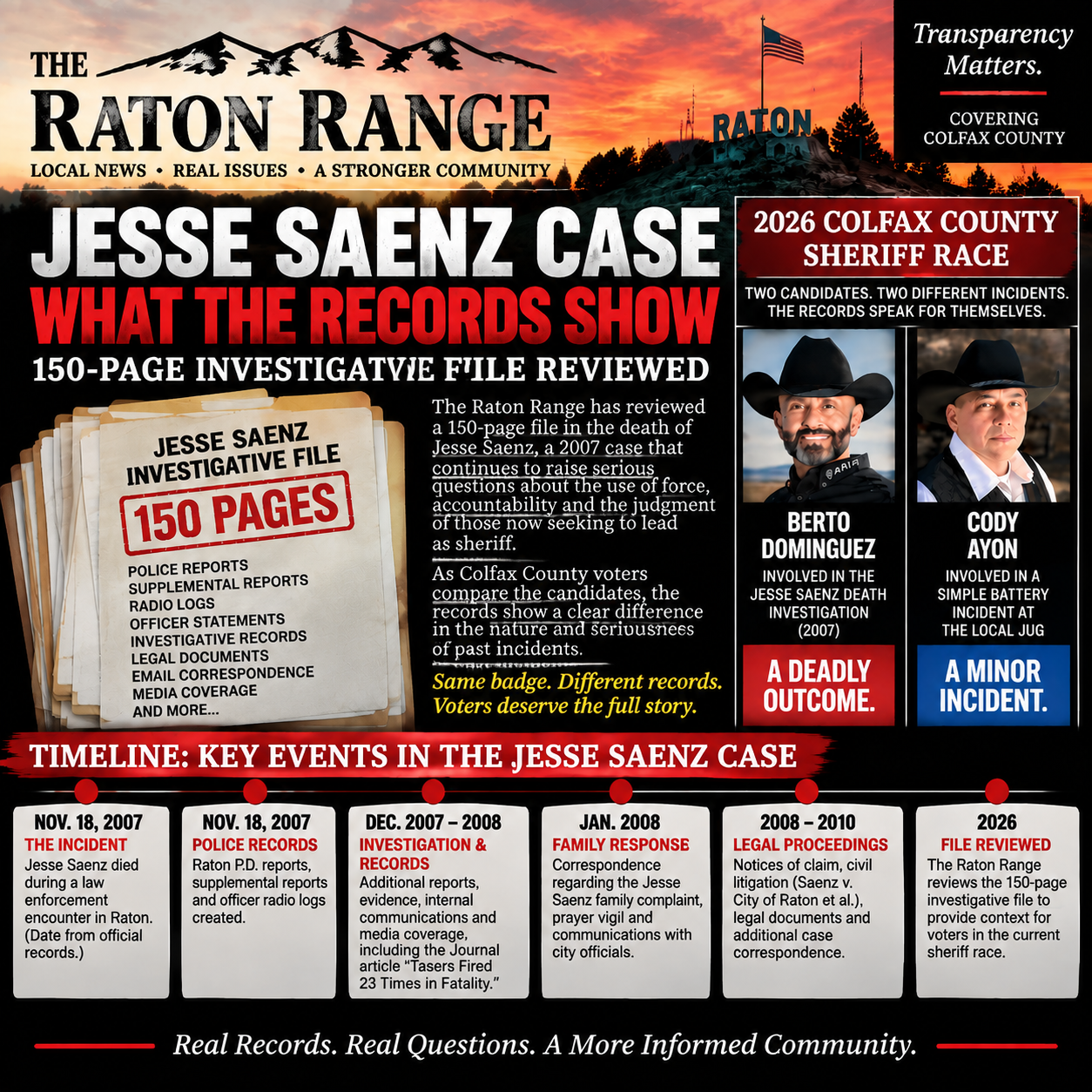
During the newspaper’s attempts to obtain records involving the 2007 death of Jesse Saenz, city records official April Lopez raised concerns in correspondence with the newspaper about revisiting old records and the effect it could have on people connected to the case. Lopez referred to reopening what she described as “old scars.”
In a separate exchange concerning the newspaper’s attempts to obtain information, Deputy Police Chief Jimmy Valdez told Raton Range publisher Roger Rael that he “doesn’t f—n work for me.”
Neither exchange establishes that Raton police improperly handled an investigation. They do, however, illustrate the tension that can arise when journalists and citizens seek information maintained by public agencies. It also exposes a common practice of local law enforcement hiding from the public they were sworn to protect.
A police officer does not work for a newspaper. A newspaper, however, has a responsibility to seek information about government actions on behalf of its readers. New Mexico’s Inspection of Public Records Act provides the public a broad right to inspect government records, subject to exemptions established by law. The central question in a records request therefore is whether a requested record is public or falls under a lawful exemption.
The history of the Saenz case illustrates why government records can remain relevant years after an incident. Saenz died following his 2007 arrest by Raton police. His death resulted in investigations, medical reviews, grand jury proceedings, criminal proceedings, and subsequent civil litigation.
Questions also remain about an April 17 explosion and fire at a duplex at 610/612 Sugarite Ave.
The building was engulfed in flames when firefighters arrived. Two units were occupied by local residents. One resident escaped with minor injuries. After firefighters extinguished the blaze, the body of Joe A. Medina was discovered inside the structure.
Because the fire resulted in a death, the State Fire Marshal’s Office became involved. Its Fire Investigations Bureau investigates the origin, cause, and circumstances of fires, including fatal fires. The cause of the Sugarite Avenue fire has not been established in public information reviewed by The Raton Range.
Residents near the location of the explosion were reluctant to speak for fear of retaliation from the housing authority. Northern Regional Housing Authority (NRHA) was asked when a report would be available. Executive Director Natasha Ortiz said that the office was no longer handling the case and it was in the hands of the state fire marshal’s office. In researching this news story, we discovered severe issues with transparency and the way agencies act not only within their own department but also in how they interact with the community, which they are entrusted to serve.
Nearly two decades later, records concerning the case remain part of Raton’s public history.
That history does not establish what occurred in today’s investigations. It does demonstrate the importance of preserving government records and making public records accessible when disclosure is required by law.
Several questions about the city’s current investigative resources remain.
Among them are how many major investigations are UNSOLVED/OPEN and how many detectives are assigned to them? Does Raton police have detectives? How many investigative positions are authorized and filled in the department? How many death investigations has the Raton police handled in the last 20 years, and how many of those cases ended with a conviction? How many cold cases does the Raton Police Department currently have?
Other questions include how frequently the department requests assistance from New Mexico State Police or other agencies, which agency is responsible for each current investigation, and what legal exemptions apply when requested records cannot be released.
Those questions can be pursued through public records requests and official responses from the agencies involved.
Not every death is a homicide. Not every unanswered question indicates wrongdoing, and requesting government records does not presume misconduct or guilt.
But when several serious incidents occur within a relatively short period, residents have a legitimate interest in knowing what happened, which agencies are investigating, and what questions remain unresolved.
The Raton Range will continue seeking records and answers from the agencies responsible for those investigations.