
By Roger Rael | The Raton Range
The highway into northern New Mexico has a way of making people disappear.
Miles of open desert. Empty stretches of pavement. A landscape where the horizon feels bigger than the plans you made that morning.
For Death Valley Dreams, the road was supposed to lead them to their next show.
Instead, it led them to Raton.
And a broken-down vehicle in a hotel parking lot accidentally became the beginning of one of the strangest chapters in the band’s touring history.
“We literally pulled into the parking spot and as soon as we got there, the lights went out,” guitarist and vocalist Ryan Williams recalled. “I’m like, uh-oh.”
The band had already survived the endless stretches of highway between Texas and Colorado, but northern New Mexico had one final surprise waiting.
An electrical problem. A dead vehicle. A missed show.
And somehow, a brand-new concert.
That is how rock-and-roll stories are born.
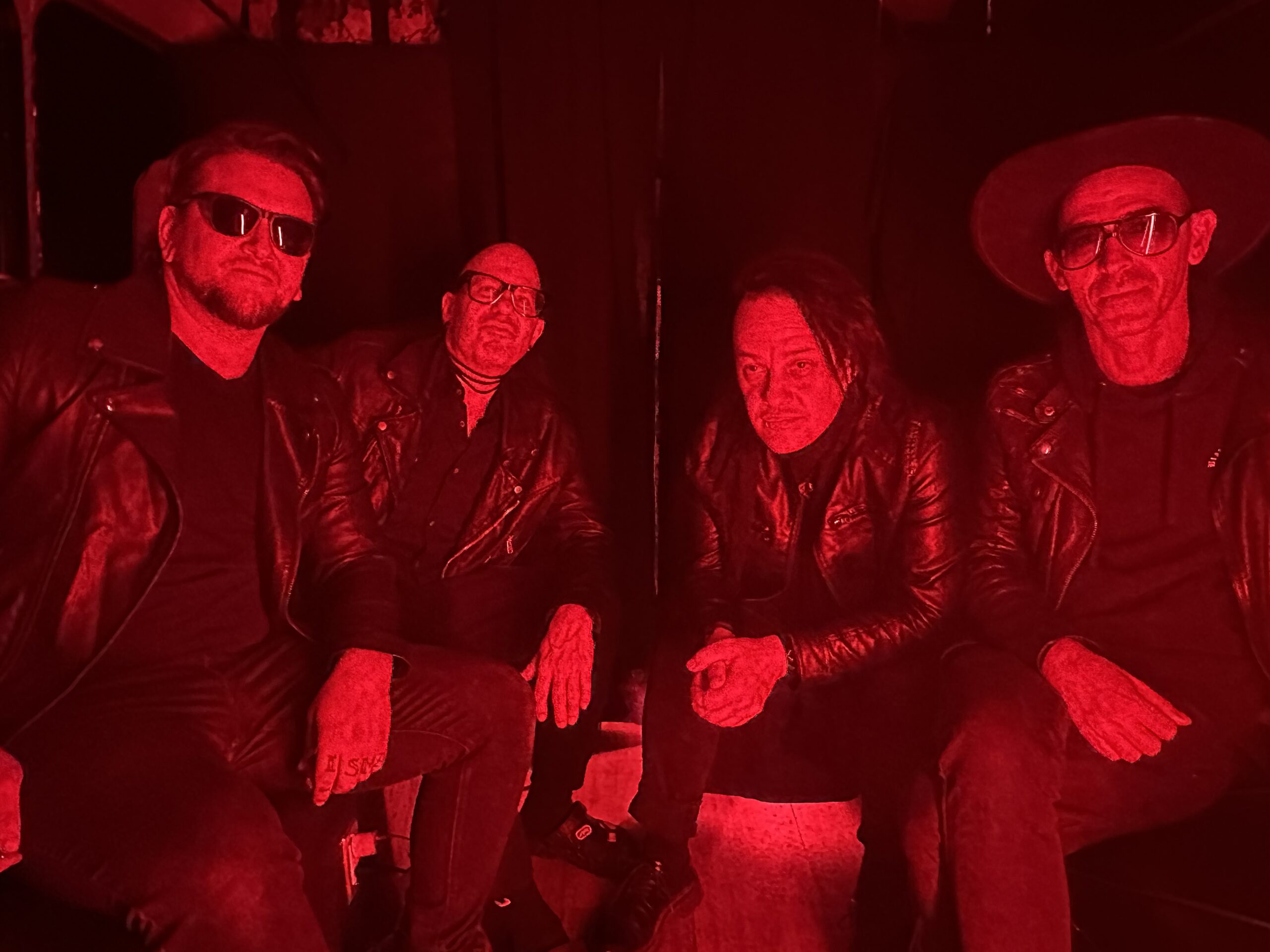
Death Valley Dreams, made up of Ryan Williams, Devin Lebsett, Nick Hoyle and Johnny Nova, arrived in Raton carrying more than instruments. They brought a sound built from dark synth landscapes, cinematic guitars and emotional weight, blending influences from bands like The Cure, Depeche Mode and decades of alternative music without becoming a museum piece.
Their latest conversation piece is their haunting interpretation of Chris Isaak’s “Wicked Game,” a song many musicians would hesitate to touch because of its iconic status.
But Death Valley Dreams did not approach it by trying to recreate the original.
They approached it by forgetting it.
“I hadn’t listened to the song in a long time,” Williams explained. “I recorded it from memory, and my memory was kind of wrong.”
That mistake became the foundation.
The guitar line was different. The rhythm was slower. The band discovered they had accidentally created something new.
“It wasn’t right,” Williams said. “But then it became a thing that happened. It was cool.”
The result is a darker, dreamier version of a song already known for longing and heartbreak.
“The original has this lonely beauty,” the band said. “Everybody has a longing for something.”
That emotional space is where Death Valley Dreams lives.
Their music does not chase nostalgia. It borrows pieces from the past and throws them into something unfamiliar.
“We use old analog synthesizers, so that naturally gives it a certain feeling,” the band explained. “But it’s a mix of a lot of things.”
The influences are there, but the goal is not imitation.
“You can’t try to write a Depeche Mode song,” they said. “It never works. You just have to do your own thing.”
That philosophy is what separates influence from imitation.
A band can borrow colors from the artists who came before them, but eventually they have to paint their own picture.
For Death Valley Dreams, that picture is cinematic.
If their music became a movie soundtrack, the band imagines something somewhere between a John Hughes film and “Donnie Darko.”
A little strange. A little emotional. A little haunting.
Which makes their unexpected arrival in Raton feel almost scripted.
After the breakdown, the band’s road crew began searching for help. A trip to AutoZone turned into meeting locals willing to lend a hand. Mechanics showed up. Strangers offered assistance. What started as a problem became a community effort.
Then came the idea nobody expected.
Why not play a show?
“We were stuck here,” the band said. “So we thought, let’s do a gig in the lobby.”
The idea grew.
Local connections were made. Flyers appeared. Other musicians joined in.
The broken-down tour stop became a concert at the Castillo Performing Arts Center.
A mechanical failure turned into a memory.
“That’s rock history right there,” the band joked.
The timing could not be better. Death Valley Dreams recently signed with Veteran Noise and is touring alongside The Rasmus and St. Agnes before the release of their upcoming album.
They are arriving at a strange moment: right before more people discover them.
Their sound is still underground, but the band believes sincerity is what connects with listeners.
“Everybody has different circumstances, but everyone has the same insecurities and feelings,” they said.
That connection is the goal.
Not perfection.
Not chasing trends.
Just honesty.
“People know when you’re not sincere,” the band said. “But if you do things that are sincere, people relate to it.”
Maybe that is why “Wicked Game” continues to survive decades after its release.
It was never just about the melody.
It was about the feeling.
And maybe that is why four musicians from Death Valley Dreams ended up stranded in Raton, New Mexico, only to find that sometimes the roadblocks become the stories worth telling.
The van broke down. The music didn’t.