
Pastor says state did not explain variance or hearing options; NMED reports no illness, written violation, or inspection report
By Roger M. Rael
The Raton Range
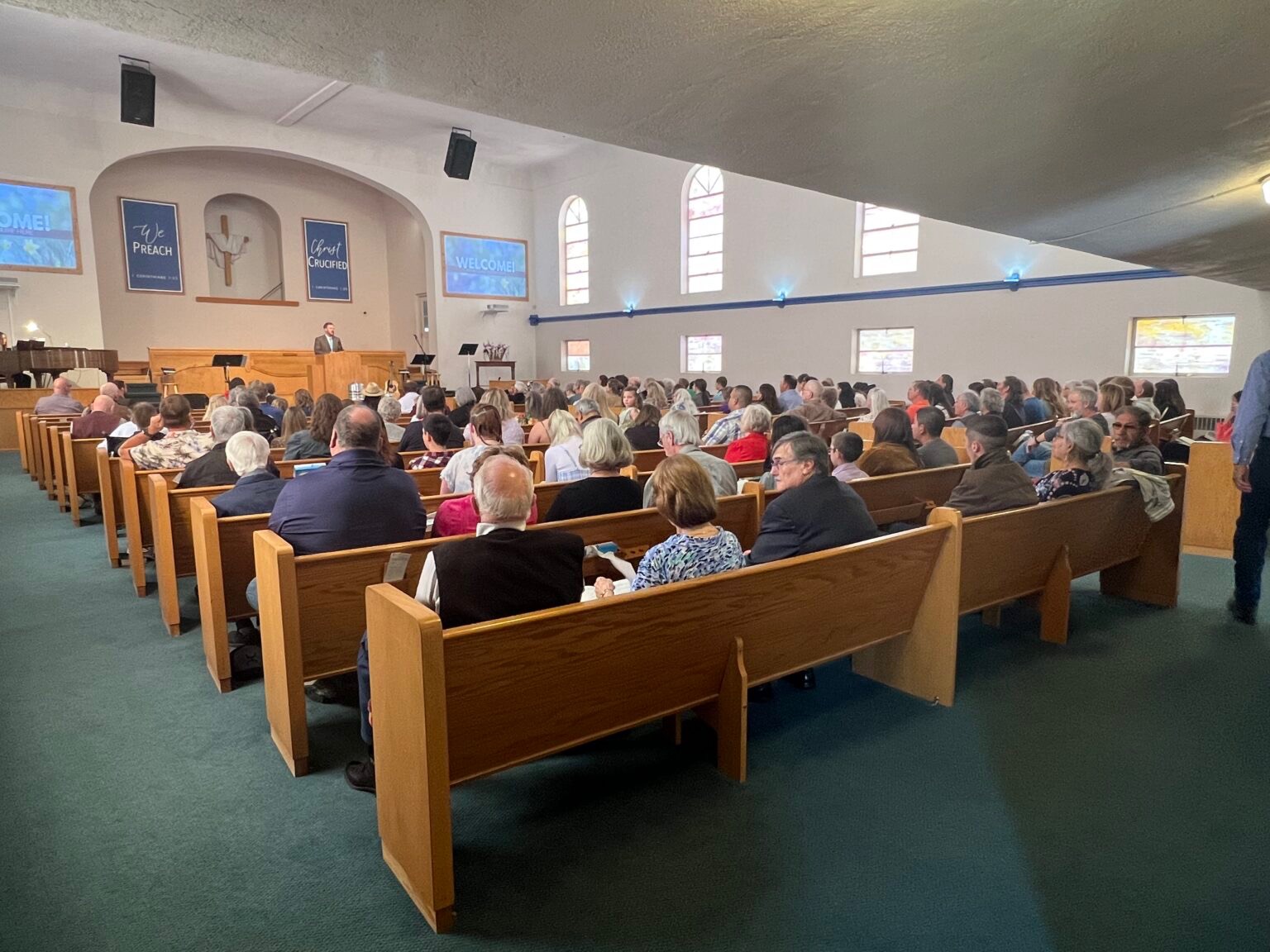
RATON, N.M. — First Baptist Church of Raton has asked a national religious-liberty organization to review the New Mexico Environment Department’s decision requiring temporary food permits for meals served at the church.
Pastor Cory Flanagin said he has spoken with attorneys from Alliance Defending Freedom several times and provided them with documents concerning the church’s Wednesday Night Fellowship Meals and the Hungry Hearts community meal program.
Flanagin said the church hopes the dispute can be resolved through a letter to the state rather than litigation. However, he said the church is prepared to pursue the matter if the permit requirements continue to burden its religious activities.
“The goal is not to have a lawsuit or some big court case,” Flanagin said. “The goal is hopefully to send a letter, have this resolved quickly and just be able to move on without the state making it burdensome for the practicing of our faith.”
The church’s decision to seek legal assistance follows written responses NMED provided to The Raton Range. The department said there had been no reported foodborne illness, no written violation and no inspection report involving either meal program.
NMED also acknowledged that it had not provided the church with a written warning, compliance order or itemized list of kitchen improvements.
Sign prompted state contact
The matter began after an NMED employee saw a sign outside First Baptist Church advertising its Wednesday meal, according to the department.
NMED said its authority comes from 7.6.2 NMAC, the state regulation governing food establishments and food processing operations.
The regulation defines a food establishment as an operation that stores, prepares, serves or otherwise provides food directly to consumers. It applies regardless of whether consumers are charged. The regulation excludes qualifying potlucks and similar events and defines a temporary food establishment as one operating at a fixed location in connection with a single event or celebration for no more than 30 days.
NMED said the church’s Wednesday meals and Hungry Hearts requested separate permits. The department said temporary permits were the fastest and least burdensome way to allow both programs to continue serving food.
One monthly temporary permit covers all Wednesday meals held during that month, according to NMED. Permit fees were waived because the meals are provided without charge.
The department described its June 30 contact with church representatives as a verbal conversation providing guidance on the permitting process.
Flanagin said the church received no inspection report, written warning, email or text message from NMED. He said any discussion about kitchen equipment or permanent improvements was verbal.
NMED said it did not order either program to stop serving meals. The agency said staff worked with the operators to expedite the temporary permits so they could continue operating.
The department also said serving food without a required permit could result in enforcement action.
Pastor says appeal options were not explained
In its written response to The Raton Range, NMED said the church could apply for a variance. The department also said a person dissatisfied with an agency decision could request an administrative hearing under Sections 8-905 through 8-908 of the state food regulations.
Flanagin said neither option was explained to church representatives during their conversations with NMED.
“That was never brought up,” Flanagin said. “It was basically, ‘Do it this way,’ or expect fines or enforcement.”
The state regulation allows a permit holder to request a hearing concerning a permit denial, denial of a variance or other compliance action. It also allows NMED to modify or waive certain requirements for a temporary food establishment when appropriate.
Flanagin said learning about those options through NMED’s response to the newspaper raised additional questions about how the matter was handled.
Potluck exemption disputed
The state’s potluck exemption has become a central issue in the dispute.
NMED told The Raton Range that a potluck may be exempt when food is prepared or contributed by participants and no fee is charged.
Flanagin said NMED employee Tanya Feely gave him a different explanation during their conversation.
According to Flanagin, Feely said the exemption would apply if church members prepared food for themselves and ate only what they brought, similar to people bringing individual lunches to a picnic.
Flanagin said he explained that a church potluck generally involves members preparing dishes at home, bringing them to church and sharing the food with others.
He said he also asked whether he could prepare meat at home and bring it to a men’s meeting at the church. According to Flanagin, Feely told him that would not be allowed.
“I don’t know what the difference is between me smoking meat at my house and bringing it for a men’s meeting and a church member cooking a dish for a potluck, bringing it and sharing it with others,” Flanagin said.
NMED’s written response said a potluck is a meal at which food is “prepared and/or contributed by the participants” and no fee is charged. The response did not state that each person must eat only the food he or she prepared.
NMED said it does not have separate written guidance specifically addressing churches, religious organizations or charitable feeding ministries.
Permit requires advance menu information
Flanagin said the temporary permit application requires the church to identify its planned meals and ingredients in advance.
He said that requirement could create problems when stores do not have a listed ingredient and the church’s cooking team must change the menu.
Flanagin said he asked Feely what would happen if NMED arrived and found the church preparing a substitute meal that was not listed on the permit.
According to Flanagin, Feely responded, “Don’t do that.”
Flanagin said the department did not explain whether it planned to conduct monthly, quarterly or unannounced inspections.
“I don’t know how the enforcement is supposed to go or if there are supposed to be any future inspections,” he said.
The regulation allows NMED to restrict the number and types of food served by a temporary food establishment, limit preparation steps and require food-safety training. It also allows the department to inspect certain temporary operations during the permit period.
No documented safety violation
NMED said it has received no report of foodborne illness connected with First Baptist Church or Hungry Hearts.
The department identified no specific food-safety violation during its contact with church representatives and issued no written list of corrective work.
NMED said equipment needs were discussed with church staff but did not identify the specific equipment in its response to The Raton Range.
Flanagin said the church has no contractor estimates for converting its kitchen into a permanent food establishment. He said general research indicated the cost could be more than the church wants or can afford.
Because the church has no contractor estimate and NMED issued no written list of required improvements, the cost of a permanent conversion has not been established.
Flanagin previously contacted state Rep. Joseph Sanchez and state Sen. Pete Campos seeking assistance. He said he had not received a response from either lawmaker.
Church hopes to avoid litigation
Flanagin said he believes the Wednesday meals are part of the church’s fellowship and practice of its faith. He said First Baptist supports food safety but objects to requirements it considers unnecessary and burdensome.
He said attorneys with Alliance Defending Freedom are reviewing the matter and the documents the church has provided.
The pastor said the church’s preferred outcome is a prompt agreement allowing it to move forward without filing a lawsuit.
“If we have to push this further, we’re willing to do that,” Flanagin said.
First Baptist Church and Hungry Hearts are operating under temporary permits while the church considers its next steps.
The dispute now centers on whether the Wednesday fellowship meals qualify for the potluck exemption, whether recurring church meals are properly handled through temporary permits, and whether NMED adequately informed the church of its right to request a variance or administrative hearing.